The law is on our side
North Carolina law (N.C.G.S. § 22B-20) protects homeowners' rights to install and reasonably use solar energy systems. In Belmont v. Farwig, the North Carolina Supreme Court affirmed that HOAs cannot use general architectural discretion or aesthetic objections to effectively prohibit solar panels when the placement is necessary for reasonable solar use and there is no enforceable recorded solar restriction that allows the denial. This is the right we are asserting in our suit.
Our covenants do not mention solar or have any recorded solar restriction. Our ARC guidelines state that panels should be placed on the rear or least visible side "whenever possible." The board has chosen to treat "whenever possible" as an effective ban on front-facing solar, even when that placement is necessary for reasonable use. This is the behavior the NC Supreme Court ruled against.
How we got here
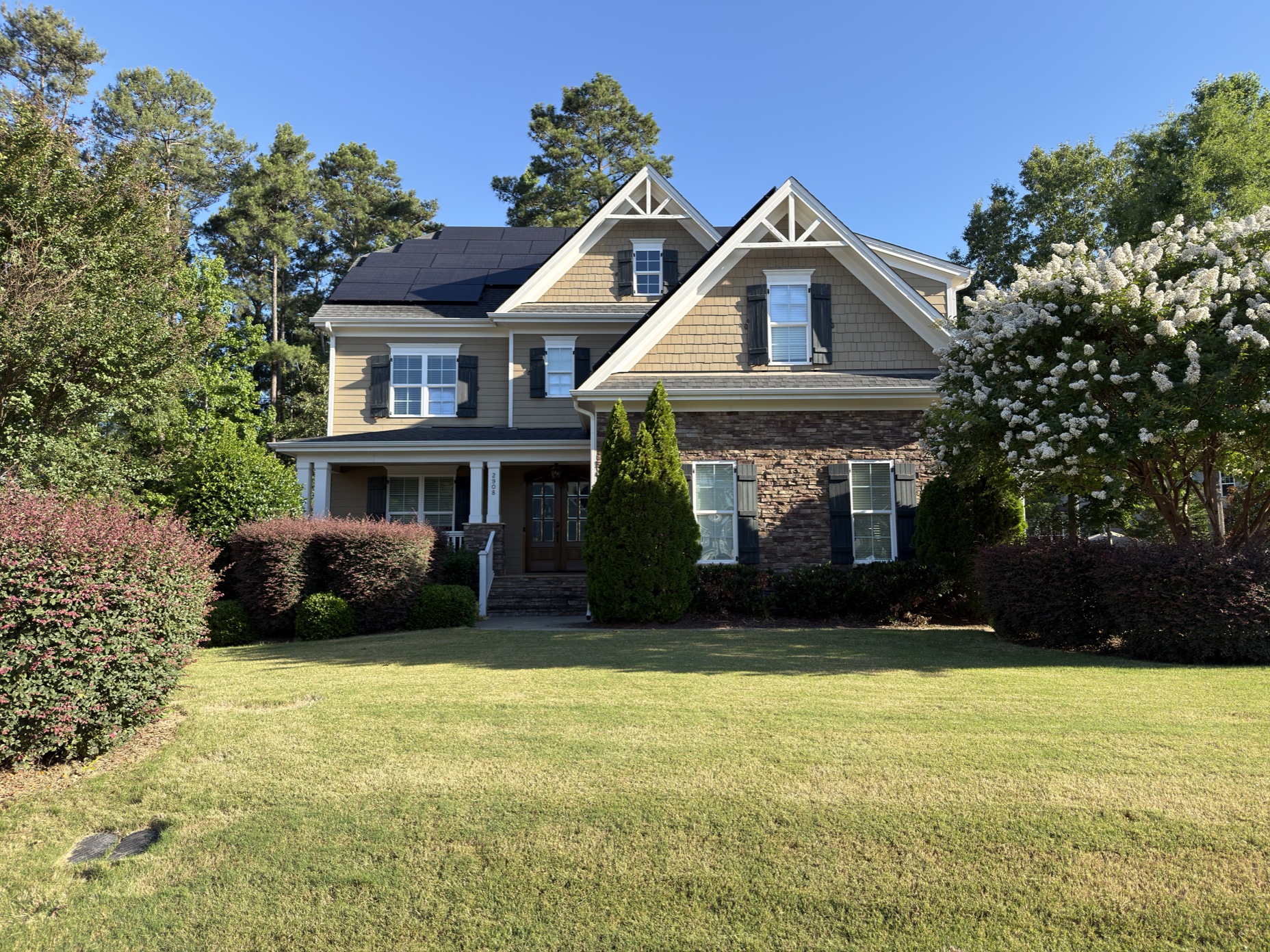
We began planning our system in June 2025, with installation scheduled for late October.
After our application and appeal were denied, we retained legal counsel in August 2025. Our appeal included a production analysis showing that placing the panels on the rear of our home would reduce production by 59%. Our counsel sent a letter to the board asking for an explanation, recognition of that 59% loss, and preservation of correspondence related to the denial. That request went unanswered for about four months.
During that time, I submitted a request to update the ARC guidelines using language similar to what the Belmont community adopted after the Farwig ruling. That request was ignored and closed without a response. I spoke with our community liaison, explained again why rear placement was not viable, and submitted another appeal with a rendering of the panels from the front of the house. That was denied too.
With federal solar tax credits expiring at the end of 2025 and Duke Energy's battery incentive program nearing capacity, we had to choose: give up our rights, delay and risk losing major incentives, or proceed and assert our rights in court only if necessary. We chose to proceed, and our installation was completed in late October as scheduled.
On December 15, nearly four months after our counsel's first letter, the HOA responded through its attorney. The response did not address the 59% production loss, identify any covenant that prohibited the panels, or explain how the denial could be reconciled with North Carolina law. It demanded removal of the panels.
The board then held an online hearing on January 22, 2026. I attended (along with the HOA's first law firm and at least one board member) and again explained why the front-facing installation was necessary and why North Carolina law protects it. After the hearing, the board retained an additional law firm and chose to begin imposing a $100 per day fine starting March 15. We paid the first round of fines, but the board sent another round of fines and is now threatening liens and collection action, so this is not something we can ignore. This is why our counsel filed the lawsuit.
Why this matters for every homeowner
We hope you support us, but this matters beyond just our home. If you have a south, east, or west-facing home and want to install solar, or hope to sell your home someday to someone who does, this affects you. Energy costs are rising. More homeowners will want the option to produce their own power, and North Carolina law protects that choice.
We did not let our property fall into disrepair. We did not create a nuisance, endanger anyone, or interfere with our neighbors' homes. We made a permitted, professionally installed improvement to our home that lowers our electric bills, provides energy independence, and improves the value of our property.
We understand that not everyone would choose an installation like ours, and we respect that. But a right is a right. The law exists so homeowners can make that decision for themselves.
How you can help
We tried to handle this privately. We asked for an explanation. We provided production data. We asked the board to engage with us about the law. Instead, the board denied the installation, ignored our correspondence, and imposed thousands in fines.
That is not something we are willing to accept, and it is not something any homeowner in Brighton Forest should have to accept.
If you support us, please let us know. Sign up for the mailing list, post a comment on Facebook or TownSq, or reach out to us privately at [email protected]. If you have also been denied solar panels, we would especially like to hear from you. The more residents speak up, the more we can do to support our rights as homeowners in Brighton Forest.
See what the reform team wants to change.